
Why Being Accurate Is Super Important
Insurance agencies do way more than people think.
Every day, teams deal with:
- Taking care of policies and changes
- Certificates of insurance
- Getting claims paperwork together
- Talking to insurance companies
- Sorting out bills
- Tracking commissions
- Managing money stuff
Each of these things has steps, depends on other things, and has deadlines.
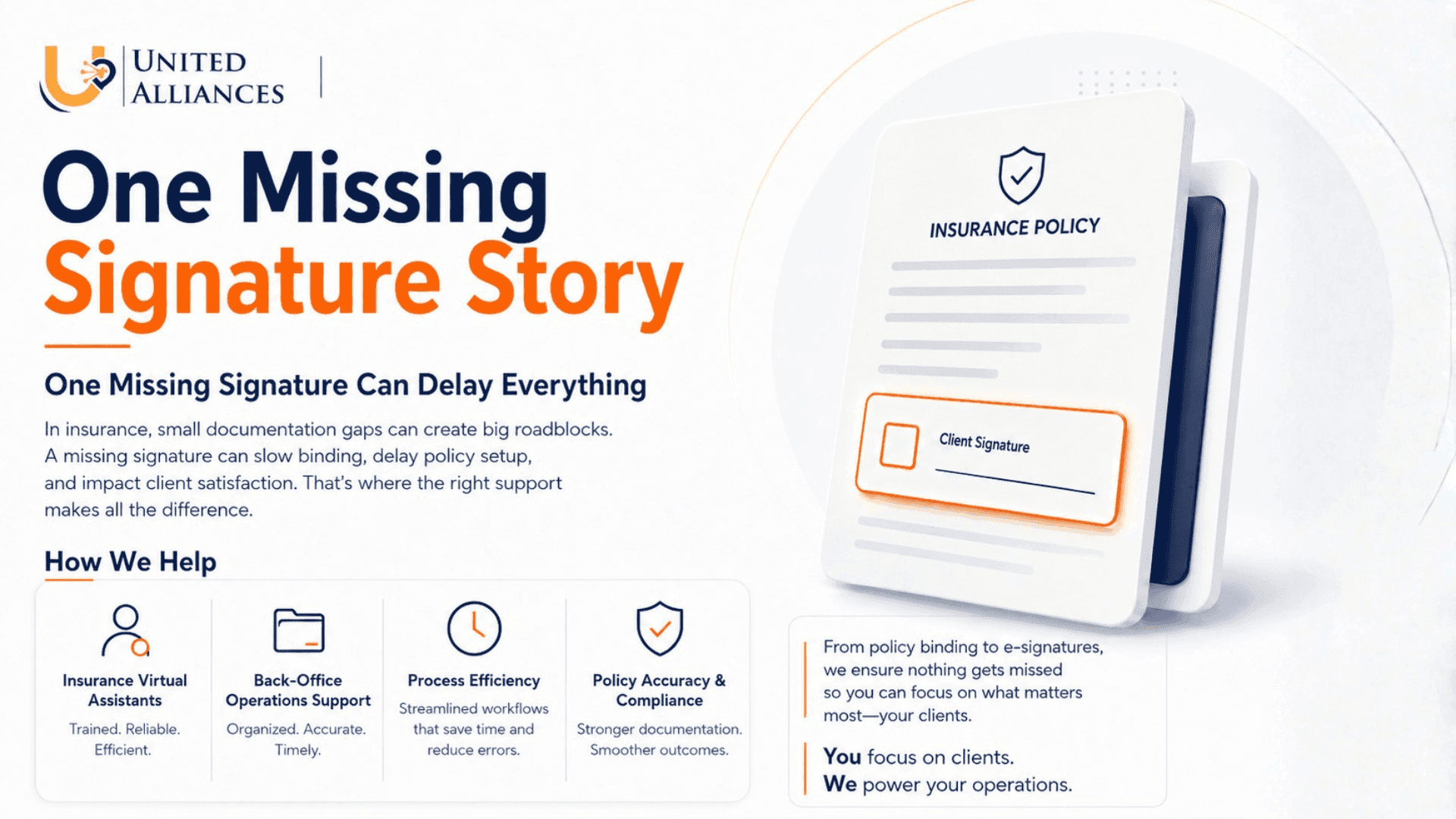
When people are swamped, they don’t mess up because they aren’t good at their jobs. They mess up because they have too much to do. Things get missed, and actions are being deferred.
Sales might look good, but the back office is often a different story.
Growing an insurance agency isn’t just about getting more clients. It’s about being in control of the systems that support everything.
The Hidden Cost of Messy Back-Office Work
Most agency owners are all about getting sales—which makes sense. But messy operations can hurt you in ways you don’t see right away.
- Slow processing makes customers wait longer.
- Missing follow-ups makes clients lose trust.
- Billing problems make it hard to see where your money is going.
- Slow billing puts pressure on your cash flow.
These things usually don’t blow up overnight. They just add up.
If you don’t have good workflows, you end up fixing problems after they happen instead of stopping them before they start.
Hiring more people can help, but it also costs more money, takes time to train them, and means more management. It’s not always the easiest way to go, especially if you’re growing fast.
That’s why many agencies are using better systems for their insurance operations.
How to Build a System That Can Handle Growth
Agencies that grow without going crazy usually have a good back-office system. More and more, that means using virtual teams to handle specific tasks.
A good system usually covers these three areas:
Insurance Virtual Assistance
Virtual assistants can handle things like processing policies, renewals, and certificates of insurance, giving quotes, and managing customer info. When these things are taken care of, the people in the office can focus on clients and making money.
The result? Less waiting and faster service.
Accounting for Insurance Agencies
Insurance accounting is a bit special. You need to know how agencies work to manage commissions, pay insurance companies, handle trust accounts, and make financial reports.
Good accounting helps you see where your money is, reduces mistakes, and keeps your books in order.
Revenue Cycle Management (RCM)
In insurance, managing your money is more than just sending bills. It’s about tracking payments, managing deadlines, finding where you’re losing money, and making billing better.
With a good RCM system, you can stay in control of your profits and finances.
By themselves, these things make things slightly better. Using those as a process together, they provide consistent operations that assist with growth.
The Practical Advantage of Teams Based Somewhere Else
People are often unsure working teams form overseas, until they see it happen correctly.
A team based somewhere else isn’t just about saving money. It’s about creating an extension of your team.
With clear instructions, responsibilities, and monitoring, these professionals can fit right into your systems. They focus on getting the work done, while you stay in control.
This approach gives you:
- Tasks completed on time
- Less paperwork
- Cost-effective growth
- Better visibility
Instead of constantly hiring and training new people, you get experienced professionals who know how insurance works right away.
That alone can make things a lot easier.
Turning Accuracy Into an Advantage
In insurance, it’s hard to stand out on price alone. Service and reliability matter.
Agencies with good operations often have:
- Happier clients
- Faster service
- Better compliance
- Clearer financial reports
- Growth without going crazy
Clients might not see what’s happening behind the scenes, but they will notice smooth renewals, quick responses, and fewer errors.
Good operations aren’t fancy. They’re steady and dependable.
And in insurance, dependability builds trust—the kind that keeps clients coming back.